African Civil Society Leaders Say the Global Aid System Is Broken; 200 Gather in Accra This Week to Create a New Africa-Led Model

African Civil Society Leaders Say the Global Aid System Is Broken; 200 Gather in Accra This Week to Create a New Africa-Led Model

Getting your Trinity Audio player ready...

In the four years to 2023 the European Union spent $16 million to boost the systems that would keep Liberians safe from gender-based violence. But in 2026 FrontPage Africa/New Narratives found a completely broken legal system in which victims had little chance of accessing justice. The head of the sexual and gender-based violence unit conceded just two perpetrators had been convicted in six years.

The outcome came as little surprise to a growing movement of people in the development sector. They have condemned an aid system designed largely in Western capitals and where the people who understand a problem best are rarely the people trusted to define it.

A major conference in Accra this week will bring together more than 200 African civil society organizations, including from Liberia, with plans to change that. Organizers say the answer is not simply more foreign aid. They want Africans themselves—from governments to communities—to have greater power to determine development priorities and how money is used.

“Let’s shift away from those of us who want to control communities to a situation where communities are in the driving seat,” said Charles Kojo Vandyck, of the West Africa Civil Society Institute, organizers of the Africa at the Center convening, in an interview.
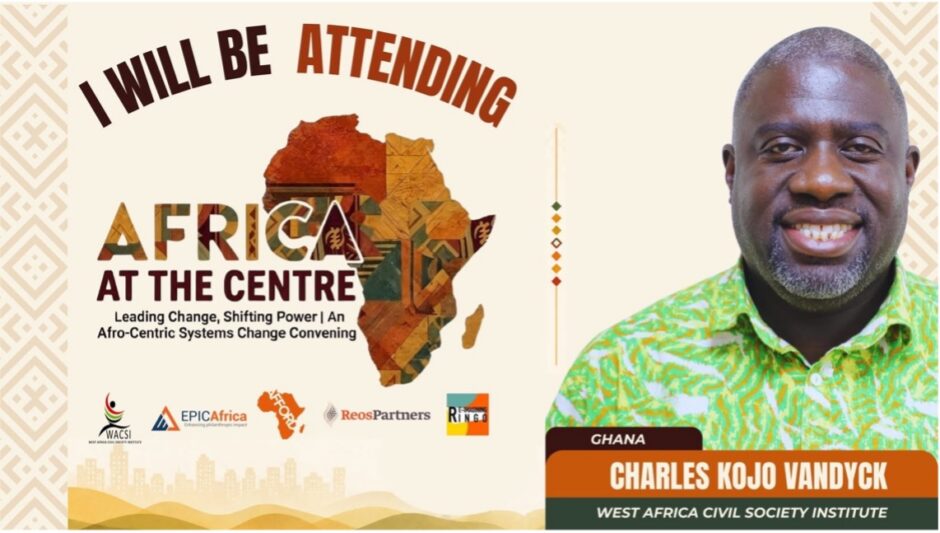
Charles Kojo Vandyck of West Africa Civil Society Institute in promotional material for the Africa at the Center Convening of African civil society leaders in Acca this week.

The idea for the Convening grew out of a WACSI project called RINGO — Reimagining the INGO — launched in 2021. More than 95 civil society leaders, funders and organizations were given one instruction: stop writing reports about what is broken and build something that works instead.

Jimm Chick Fomunjong and Gideon Ahenkorah of the West Africa Civil Society Institute, WACSI, described the assumption buried inside that system in a soon to be released opinion piece.

“The form is only the smallest expression of a much larger architecture: who controls resources, who sets the terms on which they move, and who gets to decide what counts as a legitimate priority,” the pair write. “The scale of what these prototypes are responding to is difficult to overstate, and African institutions have spent years documenting it themselves.

Africa received $74 billion in official aid in 2023. In the same year, according to the Mo Ibrahim Foundation, the continent lost an estimated $90 billion to illicit financial flows, largely through trade mis-invoicing and tax avoidance. It paid a further $103 billion servicing external debt in 2024.

At the International Monetary Fund, where decisions of consequence require an 85 percent majority, the 46 nations of sub-Saharan Africa, a region with a combined economy larger than India’s, shared just two seats on the 24 member executive board until 2024. A third was added only after a decade of advocacy. Africa’s collective vote today stands at roughly 5 per cent. None of these figures, taken together, simply describe a system that malfunctioned. They point instead to an architecture in which the rules governing money, risk and decision-making have too often been set elsewhere, with African countries carrying consequences without possessing an equivalent share of power over the system itself.”

Organizers want the Accra gathering to advance three broad goals: an African-led development financing system, development in which communities are in the driving seat, and stronger institutions that work for Africa. The conference will also showcase practical approaches already being tested rather than simply producing speeches about problems in the existing system.

One model already being tested is what the organization calls a “reverse call for proposals.” Traditionally, donors determine what they want to fund, issue a call for proposals and African organizations compete for the money. Under the reverse model, communities identify their own development priorities, develop proposals and then invite donors to apply to support them.
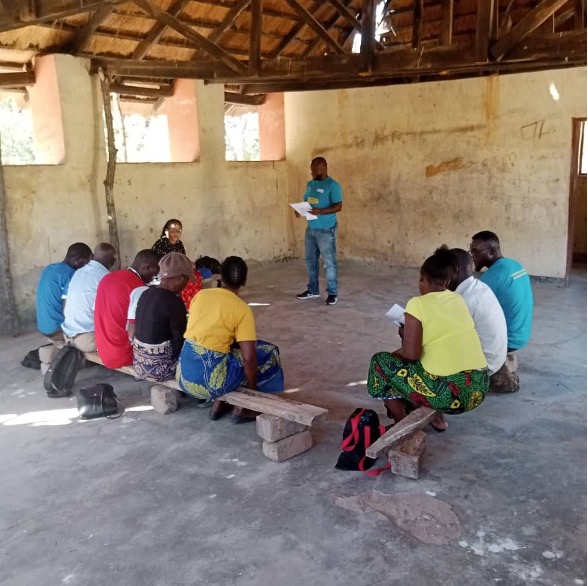
In a first-ever “reverse call for proposals” Nyankanga community in Zambia issued their own call for proposals, demanding international organizations show them how they can meet their requirements.

The approach has already been tested in the Nyankanga community in Zambia. Working with the Zambian Governance Foundation, community members identified their own development priorities and issued a proposal. Potential partners applied and the community assessed the applications and selected Plan International Zambia.

When Plan arrived with its normal due-diligence requirements, Vandyck said the community turned the process around. Community members first asked Plan to provide its annual reports, explain where it had previously invested in Zambia and demonstrate that it would remain committed to the community.

“You do not send the call, we send the call,” the community told Plan, according to Vandyck.

The amount involved, about $17,000, was small. But Fomunjong and Ahenkorah wrote that the reversal it represents is much bigger than the dollar figure suggests. The Zambian Governance Foundation has since repeated the process in nine more communities. Groups in Malawi and Ghana are testing early versions of the same approach.

Critics of existing aid model say Liberia has more to gain from a new approach than most

In Liberia the failure of the existing development model has been acute. Critics say billions of dollars spent in the country since 2003 has little to show for it with half the population in poverty and extreme poverty rising.

Wonderful Logan is on the frontline. In 2022 she heard good news that free mosquito nets were being handed out across Liberia. The Ministry of Health had received millions in funding from the $5 billion annual donor pool known as the Global Fund to supply nets to people in five counties. So she waited for her net.

“I didn’t receive any,” Logan said. “I got children, I got grandchildren.”

She ended up spending her own money to buy a net instead. Since then, she has watched some of the nets that were supposed to protect families end up somewhere else entirely — used for fishing, draped over chicken coops, or cut into pieces and sold in the market.

“I don’t really see mosquito nets in people’s houses,” Logan said. “I see it in the marketplaces.”

The Global Fund touts its success in mosquito net distribution, but a fraud investigation raised questions about the numbers in Liberia.

Nets, medicines and other supplies that are meant to be free are routinely stolen and reappear in markets to be bought by the very people they were intended for. Even if they are not stolen, Logan says most of her friends don’t believe the nets work to prevent malaria. Some believe misinformation that they constrain their spirits from leaving their bodies while they sleep.It’s difficult to trust data showing malaria incidence has decreased in Liberia. The 2022 Malaria Indicator Survey found that half the population had access to an insecticide-treated net in their household. Half of children under five and 53 percent of pregnant women — the people malaria threatens most — slept under a net the night before the survey.

But a 2022 investigation by its Office of the Inspector General found systemic fraud. Investigators found problems with 91 percent of expenditures reviewed, totaling $1.1 million – citing fraudulent vehicle contracts, inflated bills and almost no internal controls. For 75 percent of field activities checked, they couldn’t confirm programs had even happened. The Malaria Indicator Survey was one of the activities undertaken with Fund money.

It is exactly the kind of failure Charles Kojo Vandyck, WACSI’s head of capacity building, says has to end on both sides. Secretive decision making without clear explanations, reporting and community buy-in leaves communities powerless to hold leaders accountable.

“There’s very little attention on when the funds are disbursed and where the funds actually go,” Vandyck said.

Vandyck says that African ownership and greater transparency with populations will ensure greater accountability. He said citizens and civil society organizations must follow public money and hold governments accountable for how it is actually spent. The Africa at the Centre gathering comes at a pivotal moment. Foreign aid is being cut while African governments and civil society organizations are increasingly questioning a decades-old development model. Ghana turned down a new health funding agreement with the US Trump administration this year after officials decided the data-sharing terms it demanded cost more than the funding was worth. Zimbabwe had already rejected a similar deal. Kenya’s version of the same fight is now in its own courts.

Organizers of the Accra conference, running from September 1 to 3, say the gathering will produce a formal commitment to build what they call an African-owned architecture for development — one with African priorities, African resources and African agency at its center.

This story was a collaboration with New Narratives as part of the Investigating Liberia project.

Source: New Narratives

About the author

Author profile

Share:

Leave your comments

FIIFI BOATENG

Fiifi is a Ghanaian and currently serves as Communications and Information Officer at the West Africa Civil Society Institute. He joined the Institute in December 2020.

NANCY KANKAM KUSI

Nancy is a Ghanaian and currently serves as Programme Officer in the Knowledge Management unit at the West Africa Civil Society Institute. She joined the Institute in January 2021.

AGNES ADWOA ANIMA

Agnes is a Ghanaian and currently serves as Head of the Administration unit in the West Africa Civil Society Institute (WACSI). She joined the Institute in October 2021.

DORIS ODEI

Doris holds a Bachelor of Arts in Social sciences (Economics and Sociology) from the University of Cape Coast. She is passionate about impacting young lives hence co-founded Impart Foundation. A non-profit organization which seeks to empower young lives through education, technology and entrepreneurship.

PRINCE AKOWUAH

Prince Akowuah is a Ghanaian and currently the Programme Assistant in the Translation Unit at the West Africa Civil Society Institute (WACSI). She joined the Institute in 2020.

MAXWELL APENTENG

Maxwell Apenteng is a Ghanaian and joined WACSI in September 2010. He provides gardening and janitorial services at the Institute.

GEORGE ADU-MINTAH

George Adu-Mintah is a Ghanaian and currently the Protocol Assistant/Driver at the West Africa Civil Society (WACSI). He joined the Institute in October 2006.

IBRAHIM KWAKU GBADAGO

Ibrahim Kwaku Gbadago is a Ghanaian. He joined the Institute in 2008 and provides janitorial services and assisting the institute's errands. Before joining the Institute, he worked at the Palestinian embassy in Accra, Ghana.

RUTH YAKANA

Ruth Yakana is from Cameroon and currently the Receptionist at the West Africa Civil Society Institute (WACSI). She joined the Institute in 2020.

BETHEL KWAME BOATENG

Bethel is a Ghanaian. He provides technical and IT related support to the Institute. He joined the Institute in October 2006.

WHITNAY SEGNONNA

Whitnay Segnonna holds a Bachelor’s Degree in International Management from the University of Benin. With 2 years of experience, she has a strong knowledge of organizational and project management. Combined with her bilingualism, she is very passionate about her work. She joined WACSI as Project Assistant on Critical Ecosystem Partnership Fund (CEPF) for the Capacity Development Unit.

STELLA YAWA WOWOUI

Stella Yawa Wowoui holds a Bachelor’s Degree in Translation Studies. She has a perfect grasp of both French and English, as well as an intermediate level in Spanish. She is currently working as a Project Assistant on the Techsoup Project.

KWAME ASANTE

Kwame is an experienced IT Consultant/Software Developer. He is skilled in Web Applications Development, Digital Security, Database Management, Digital Marketing and Brand Management. He holds a Bachelor's Degree in Information Technology and is a Microsoft Programme Alumni. He is currently serving as a Marketing and IT Officer on the Techsoup Project.

GRACE AKPENE ZIGGAH

Grace Akpene Ziggah is a Togolese and currently the Logistics Officer and also assists in administration duties at the West Africa Civil Society Institute (WACSI). She joined the Institute in June 2009.

LILLIAN DAFEAMEKPOR

Lilian Dafeamekpor is a Ghanaian and currently the Assistant to the Executive Director at the West Africa Civil Society Institute (WACSI). She joined the Institute in 2020.

JOHN P. FRINJUAH

John P. Frinjuah has expertise and interests in civil society, international development, democracy and governance, conflict, crisis, and security. He has extensive experience working with civil society and international development organizations where he supported and managed research, programmes, and provided technical assistance on a variety of themes around public policy, governance, and development. He is an alumnus of the University of Ghana and the Fletcher School of Law and Diplomacy - Tufts University in the United States, with a Bachelor of Arts in Political Science and Master of Arts in Law and Diplomacy from two institutions respectively. John speaks English, French and several Ghanaian and regional West Africa languages.

GERVIN CHANASE

Gervin has extensive international development experience, including 5 years of policy advocacy and capacity building of grass root organisations. He has implemented over the years a combination of agriculture value chain, livelihood, food security and governance and rights programmes.
Prior to joining WACSI, Gervin worked on two USAID projects focusing on agriculture value chain development and governance in northern Ghana
Gervin holds a master’s degree in development & Governance from the University of Duisburg-Essen, Germany as well as a Masters in Global Studies from the Universities of Vienna (Austria), Leipzig (Germany) and California (Santa Barbara), USA. He is passionate social justice and inclusion.

LEANDRE BANON

Leandre Banon, Beninese, joined WACSI in September 2014 as Capacity Development Programme Assistant. Since then, he has worked in various units within the Institute to support operational and institutional capacity strengthening programmes for civil society in the region. Currently serving as Capacity Development Programme Officer at WACSI, his main responsibilities involve designing, planning, implementing and monitoring capacity development programmes for civil society constituents and grouping across the West Africa. Leandre is a certified Change the Game Academy Programme Trainer. His background lies in the areas of economics and development planning.

SAMUEL APPIAH

Samuel Appiah is a Ghanaian and currently the Programme Officer in the Finance and Administrative Unit at the West Africa Civil Society Institute (WACSI). He joined the Institute in May, 2016.

JIMM CHICK FOMUNJONG

Jimm Chick Fomunjong, Cameroonian, joined WACSI in May 2018 as the Head of the Knowledge Management and Communication Units of the Institute. He has over ten years’ experience as a journalist and a development communications expert. He has a vast experience in supporting African organisations to strengthen their internal and external communications, building and sustaining relationships with the media and, leveraging on the power of social media to promote their mission. He is also excellent at supporting organisations to set up and operationalise functional communications and knowledge management systems. He has a deep passion and expertise in supporting Africans and African civil society organisations to document their praxis, share and learn from experiences documented from the African civil society sector.

FRANCK A. SOMBO

Franck Sombo is a development practitioner with the drive to lead self and others to influence productivity and efficiency. His work involves supporting organisations to develop strategic plans, design monitoring and evaluation systems, develop and use relevant performance measurement tools to track progress, assess organizational growth and institutionalise learning. Franck has eight years of experience working with WACSI where he currently serves as the Head, Monitoring, Evaluation and Learning. His academic qualifications include Masters in Organisations’ and Projects’ Management, and in Business Sciences and a High National Diploma in Finance and Accounting.

Franck is a Fellow of the International Program for Development Evaluation Training (IPDET) and a graduate of the Graduate Training Institute (GTI) - Ghana with specialization in Strategic Management and Corporate Leadership. He has a rich experience in Project Management, Capacity Development, Strategic planning, Data Analytics, Monitoring and Evaluation, Training and Facilitation, Mentoring and Coaching among others.

OMOLARA T. BALOGUN

Omolara is a development practitioner and advocacy strategist with over 15 years of progressive experience in development programming targeted at strengthening civil society in West Africa.

She joined WACSI in November 2009 as a Regional Advocacy Consultant and later became the first Policy Advocacy Officer of the Institute in 2010.

She was promoted to Head of the Policy Influencing and Advocacy (PIA) Unit in 2015. As the Head of the PIA unit, Omolara offers strategic direction to the Institutes’ ambitions to connect and convene groups of organised and organic civil society actors; and influence regional and global discourses on crosscutting policy issues including—civil society regulations, sustainable development goals, civic space and enabling environment, aid effectiveness, gender equality, and civil society accountability.

Previously, Omolara served as a Programmes Associate with the Women in Peace and Security Network-Africa (WIPSEN-Africa), where she worked with her team to design and implement pan-African programmes on—multidimensional peace support operations and gender mainstreaming in security sector reform in Ghana, Sierra Leone, and Liberia.

She also served as a Service Development Marshal at TVQ Consulting Group, a customer service firm focused on designing strategic customer relationship and business growth plans for private and public financial institutions in Nigeria.

Omolara is a social justice advocate, a network weaver, and a convener. She has a postgraduate degree in Peace and Conflict Studies; a degree in International Relations and History, from the University of Ibadan and Obafemi Awolowo University in Nigeria respectively.

She also holds executive certificates in Behavioral Science in Public Policy from Harvard University Executive Education in Cambridge and in Citizen Advocacy from the Coady International Institute, St Francis Xavier University in Canada.

KWABENA KRODUAH

Kwabena Kroduah is a Ghanaian and currently heads the Finance Unit at the West Africa Civil Society Institute (WACSI). He joined the Institute in January 2008.

CHARLES KOJO VANDYCK

Charles currently serves as the Head of the Capacity Development Unit at the West Africa Civil Society Institute (WACSI). Charles has over 10 years of experience working in international development and social justice issues in Africa. Charles has expertise in strengthening civil society and public agencies including the design and implementation of governance and leadership programmes, development of knowledge pieces and policy advice. Charles was the founding Board Chair of Innovation for Change (i4C)-Hub Afrique, as well as the founding member of the International Consortium on Closing Civic Space (iCon), an initiative of the Centre for Strategic and International Studies (CSIS) in Washington DC. Charles currently serves as the Member of the Governing Board (Coordination Collective) of Africans Rising. He is a Member of the Development Studies Association, United Kingdom. Charles is a 2017 Stanford University Fellow for Nonprofit Leaders and a certified Change the Game Resource Mobilisation Trainer.

NANA ASANTEWA AFADZINU

Nana Afadzinu is a Ghanaian and currently serves as the Executive Director of the West Africa Civil Society Institute (WACSI). She joined the Institute in October 2010.