

September 23, 2026 In WACSI in the News By WACSI
Aid system is broken, African Civil Society leaders say; 200 gather in Accra to build a new Africa-Led model
| Getting your Trinity Audio player ready... |
For decades, development money in Africa has arrived with its own instructions: what to fix, how to fix it, and who should do the work. Now a small but growing movement is asking a different question: what if the people receiving the money wrote the brief?
By Caleb Ahinakwah
A community in Zambia, Nyankanga, had spent years being asked to explain its problems to international organisations that arrived with forms, frameworks and programmes designed in foreign capitals that failed to address the community’s real needs. So, in 2024, it decided to reverse the arrangement.
Instead of waiting for a donor to announce what it wanted to fund, the community wrote its own call for proposals.
It identified the things it wanted changed over the coming years: better basic services, stronger schools, support for subsistence farmers and roads capable of reaching a clinic. It worked out the costs. Then it did something that, in the development world, communities are rarely invited to do.
It asked donors to apply to fund them.
The “reverse call for proposals” is just one of a number of ideas being tried by a growing movement of African civil society organisations. They have condemned an aid system designed largely in Western capitals and where the people who understand a problem best are rarely the people trusted to define it.
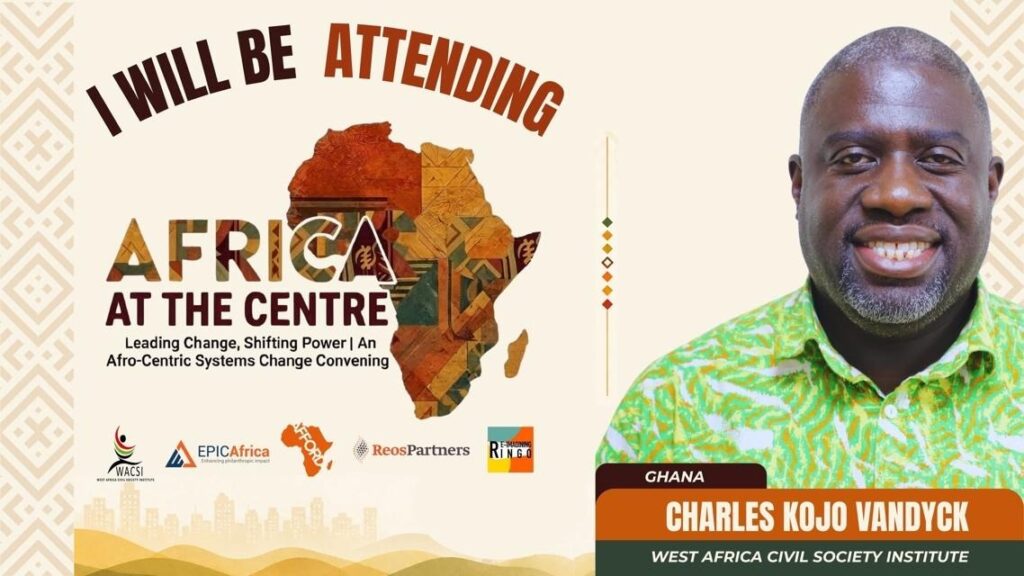
At a major conference in Accra this week, more than 200 leaders from 30 countries will gather for Africa at the Center: Leading Change, Shifting Power, the first time African civil society organizations have gathered to come up with concrete plans for an African-led disruption of the aid system that they say is rooted in centuries of colonial relationships.
“Let’s shift away from those of us who want to control communities to a situation where communities are in the driving seat,” said Charles Kojo Vandyck, of the West Africa Civil Society Institute, organizers of the convening, in an interview.
The idea for the event grew out of a West Africa Civil Society Institute project called RINGO — Reimagining the INGO — launched in 2021.
More than 95 civil society leaders, funders and organizations were given one instruction: stop writing reports about what is broken and build something that works instead.
Jimm Chick Fomunjong and Gideon Ahenkorah of the West Africa Civil Society Institute described the assumption buried inside that system in a soon-to-be-released opinion piece.
The aid world’s traditional call for proposals is the mechanism by which government, foundation or international agency decides what it wants to fund, writes the objectives and conditions, publishes an invitation, and waits for organisations to respond.
The call for proposals “is only the smallest expression of a much larger architecture: who controls resources, who sets the terms on which they move, and who gets to decide what counts as a legitimate priority,” the pair write.
“The scale of what these prototypes are responding to is difficult to overstate, and African institutions have spent years documenting it themselves.
Africa received $74 billion in official aid in 2023. In the same year, according to the Mo Ibrahim Foundation, the continent lost an estimated $90 billion to illicit financial flows, largely through trade mis-invoicing and tax avoidance. It paid a further $103 billion servicing external debt in 2024.
At the International Monetary Fund, where decisions of consequence require an 85 percent majority, the 46 nations of sub-Saharan Africa, a region with a combined economy larger than India’s, shared just two seats on the 24-member executive board until 2024.
A third was added only after a decade of advocacy. Africa’s collective vote today stands at roughly 5 per cent. None of these figures, taken together, simply describe a system that malfunctioned.
They point instead to an architecture in which the rules governing money, risk and decision-making have too often been set elsewhere, with African countries carrying consequences without possessing an equivalent share of power over the system itself.”
Organizers want the Accra gathering to advance three broad goals: an African-led development financing system, development in which communities are in the driving seat, and stronger institutions that work for Africa. The conference will also showcase practical approaches already being tested rather than simply producing speeches about problems in the existing system.
Nyankanga’s experiment is one of those approaches. The community foundation sat down and assessed them, much as a donor would normally assess the organisations seeking its money. 20 applications came back. Eventually, it chose Plan International Zambia.
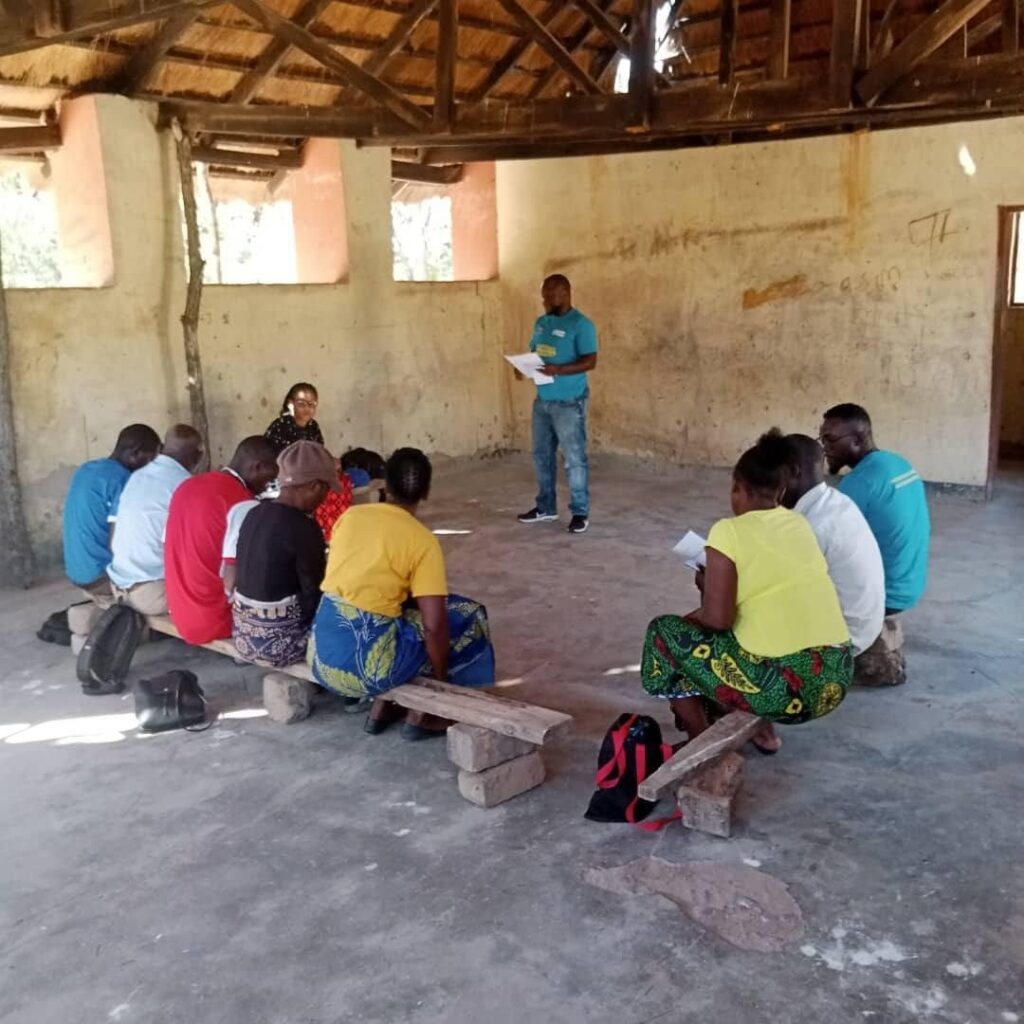
When Plan’s team arrived expecting to conduct the usual due diligence on the community, they were stopped.
“You did not send the call. We sent the call,” the community said, according to Charles Kojo Vandyck, of the West Africa Civil Society Institute (WACSI), the Convening organisers, in an interview.
The questions were suddenly going in the other direction. Where were Plan’s annual reports? What had it previously invested in Zambia? What would happen to the community if the organisation withdrew? The questions were not merely about whether Plan could deliver a project. They were about whether it could be trusted as a partner.
The money at stake was relatively modest – about $17,000. Proponents of a new approach to aid say the idea was not. It started a snowball that proponents say could revolutionise the aid dynamic.
Source: My Joyonline
About the author

- WACSI
- WACSI
- WACSI
- WACSI
- WACSI
- WACSI
- WACSI
- WACSI
- WACSI
- WACSI
- WACSI
- WACSI
- WACSI
- WACSI
- WACSI
- WACSI
- WACSI
- WACSI
- WACSI
- WACSI
- WACSI
- WACSI
- WACSI
- WACSI
- WACSI
- WACSI
- WACSI


